Month-End Bookkeeping Tips to Keep Finances on Track
Follow these month-end bookkeeping tips to track cash flow, reconcile accounts, manage invoices and keep your business finances organised.

If you’ve ever wondered whether bookkeeping and accounting are the same thing, you’re not alone. Many business owners use the terms interchangeably, but while they go hand in hand, they each play a different role in keeping your business financially healthy.
Think of bookkeeping as the foundation of your finances. It keeps your records organised and accurate. Accounting then takes that information and turns it into valuable insights that help you make smarter business decisions.
Whether you’re just starting out or managing an established business, understanding the difference can save you time, improve your cash flow, and give you greater confidence in your financial decisions.
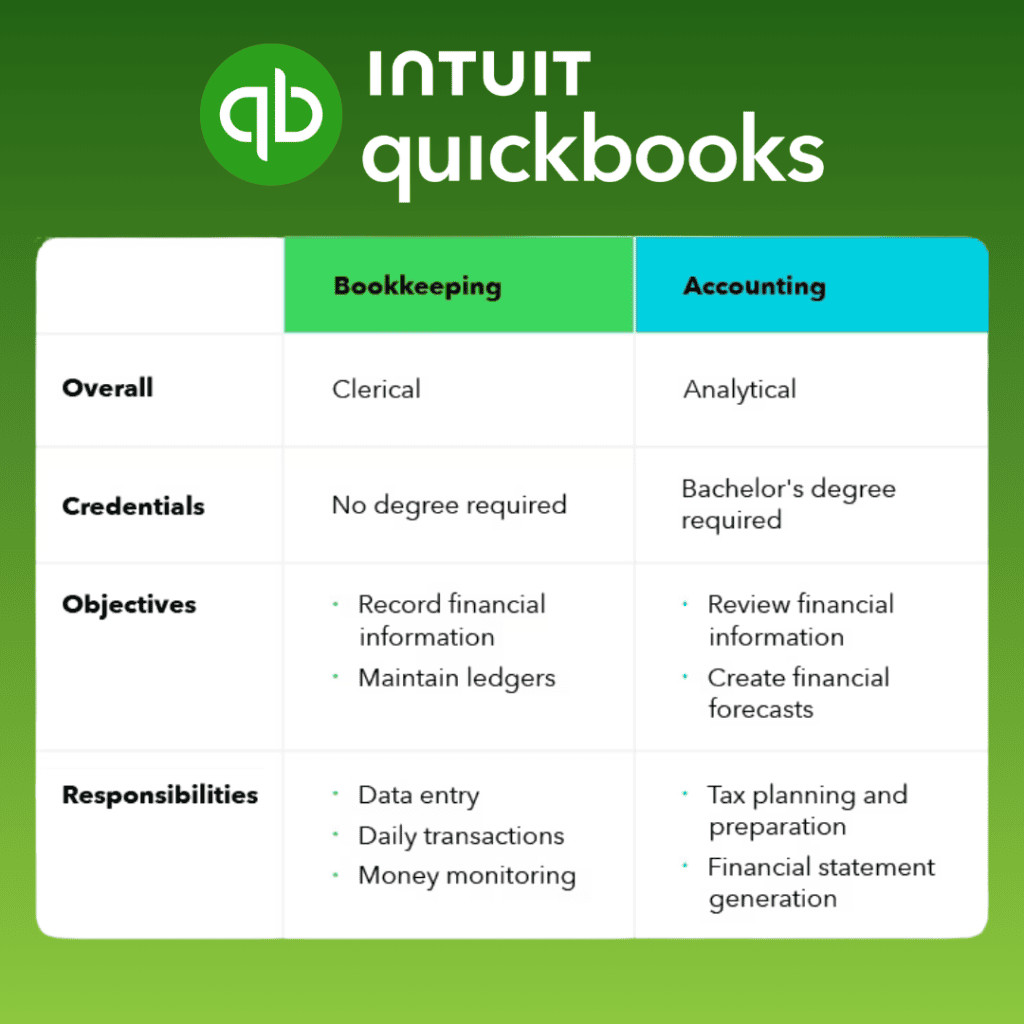
Bookkeeping is the day-to-day recording of your financial transactions. This includes:
Think of bookkeeping as keeping your financial records organised and up to date.
Accounting takes those financial records and turns them into valuable insights. An accountant can:
Think of accounting as using your financial data to help you grow your business.
Bookkeeping and accounting work hand in hand. Without accurate bookkeeping, accountants don’t have reliable data to work with. Without accounting, you’re missing the insights needed to make informed business decisions.
Using cloud accounting software like QuickBooks makes both processes easier by automating data entry, reducing errors, and providing real-time financial information.
QuickBooks makes it easier to manage your bookkeeping while providing accountants with accurate, real-time financial information.
With QuickBooks you can:
Instead of spending hours updating spreadsheets or chasing paperwork, QuickBooks keeps your financial information organised so both bookkeepers and accountants can work more efficiently.
When you choose QuickBooks through Accountancy Software, you’re getting more than just accounting software. As an Irish Elite QuickBooks ProAdvisor and authorised reseller, we provide local expertise and support to help you get the most from your investment.
Here’s what sets us apart:

Follow these month-end bookkeeping tips to track cash flow, reconcile accounts, manage invoices and keep your business finances organised.
Avoid common bookkeeping mistakes small businesses make. Learn how to keep accurate records, manage invoices, VAT and cash flow with QuickBooks Online.
Learn the bookkeeping basics for small businesses, from Profit & Loss and Balance Sheets to bank reconciliation, expenses and QuickBooks.
| Cookie | Duration | Description |
|---|---|---|
| cookielawinfo-checkbox-analytics | 11 months | This cookie is set by GDPR Cookie Consent plugin. The cookie is used to store the user consent for the cookies in the category "Analytics". |
| cookielawinfo-checkbox-functional | 11 months | The cookie is set by GDPR cookie consent to record the user consent for the cookies in the category "Functional". |
| cookielawinfo-checkbox-necessary | 11 months | This cookie is set by GDPR Cookie Consent plugin. The cookies is used to store the user consent for the cookies in the category "Necessary". |
| cookielawinfo-checkbox-others | 11 months | This cookie is set by GDPR Cookie Consent plugin. The cookie is used to store the user consent for the cookies in the category "Other. |
| cookielawinfo-checkbox-performance | 11 months | This cookie is set by GDPR Cookie Consent plugin. The cookie is used to store the user consent for the cookies in the category "Performance". |
| viewed_cookie_policy | 11 months | The cookie is set by the GDPR Cookie Consent plugin and is used to store whether or not user has consented to the use of cookies. It does not store any personal data. |